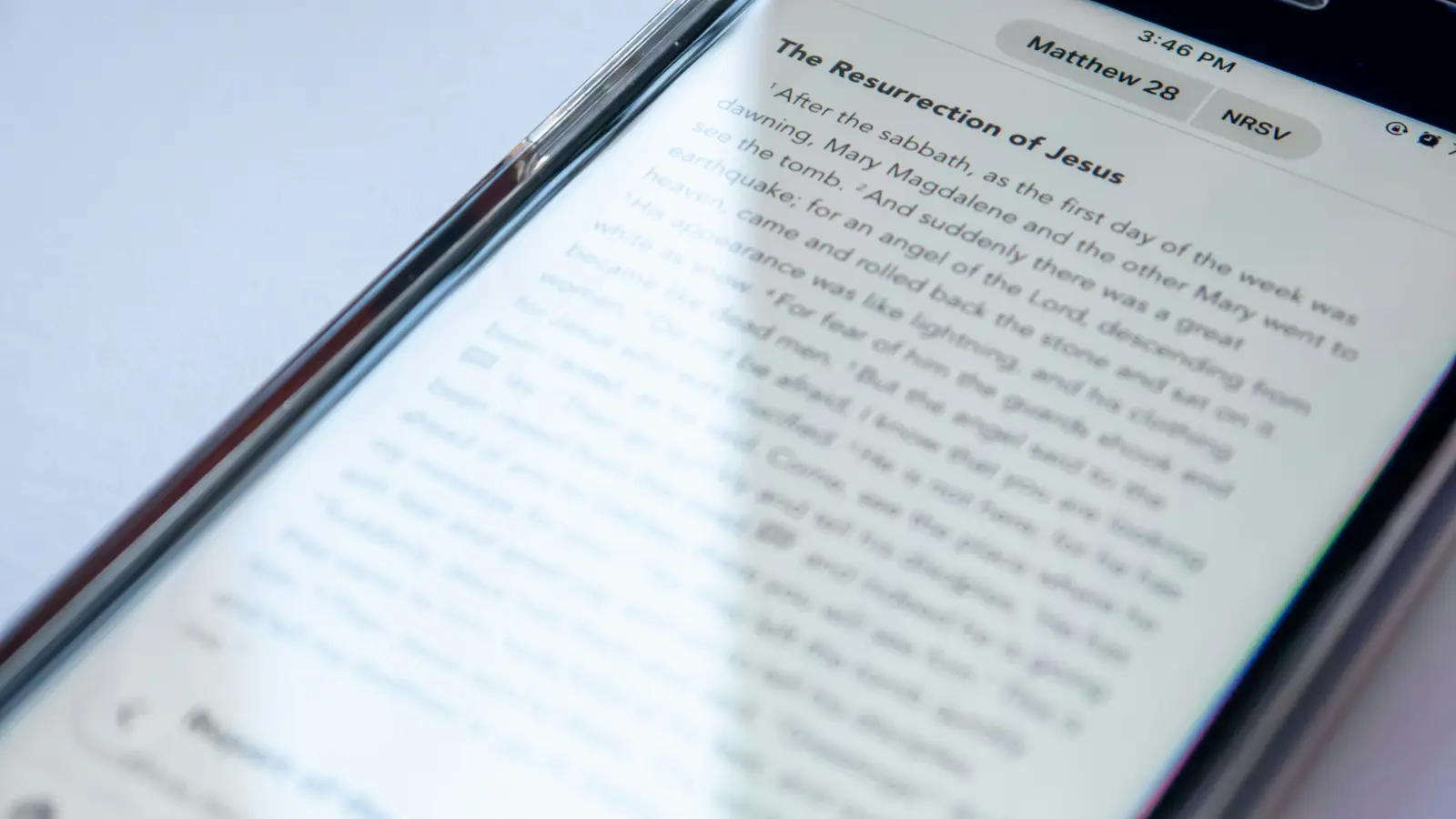
Opening the Bible for the first time, or for the first time in years, can feel like walking into a library without a map. It is a collection of many books written over many centuries, and it does not have to be read in order. A good beginner plan is short, clear and easy to keep. Here is one way to start.
Where to start
Start with a Gospel. Matthew, Mark, Luke and John tell the life, teaching, death and resurrection of Jesus, which is the center of the Christian faith in every tradition. Reading a Gospel first gives you the main story, and the rest of the Bible becomes easier to place.
- Mark is the shortest Gospel, with 16 chapters. It moves quickly and is a natural first book.
- John has 21 chapters and is more reflective. Many people read it right after Mark, or start with it.
Why not Genesis? You can, and it is a wonderful book. But reading straight through from the beginning leads into long sections of law and lists of names in the following books, and many beginners lose momentum there. It is often easier to come back to them once the habit is set.
Three simple plans
1. Mark, then John
One chapter a day. Mark takes about two weeks, and John about three. Together they make a five week plan that covers the heart of the story.
2. Psalms and Proverbs
One psalm a day for prayer and one chapter of Proverbs for practical wisdom. Proverbs has 31 chapters, so many people read the chapter that matches the date of the month. This plan is gentle and works well alongside a Gospel.
3. A Gospel plus a psalm
Our starter plan below combines both: one Gospel chapter each day, with an optional psalm. It takes about 5 to 10 minutes.
How much to read each day
Aim for 5 to 10 minutes. Most chapters in the Gospels can be read slowly in a few minutes. Reading a little every day builds understanding and a habit at the same time, while a long session once a week tends to fade. If you have more time on some days, use it to reread, not to rush ahead. For more on keeping it going, see how to read the Bible every day.
Choosing a translation and an app
Pick a translation you can read easily, or the one your church uses. Catholic and Orthodox Bibles include some books that most Protestant Bibles do not, but the Gospels and Psalms are in every Christian Bible. Your Bible app is a fine place to read: you can keep your place, use a reading plan and adjust the text size.
A 30-day starter plan
Read the main chapter every day. Add the psalm when you have a few extra minutes.
| Day | Main reading | Optional extra |
|---|---|---|
| Day 1 | Mark 1 | Psalm 1 |
| Day 2 | Mark 2 | Psalm 2 |
| Day 3 | Mark 3 | Psalm 3 |
| Day 4 | Mark 4 | Psalm 4 |
| Day 5 | Mark 5 | Psalm 5 |
| Day 6 | Mark 6 | Psalm 6 |
| Day 7 | Mark 7 | Psalm 7 |
| Day 8 | Mark 8 | Psalm 8 |
| Day 9 | Mark 9 | Psalm 9 |
| Day 10 | Mark 10 | Psalm 10 |
| Day 11 | Mark 11 | Psalm 11 |
| Day 12 | Mark 12 | Psalm 12 |
| Day 13 | Mark 13 | Psalm 13 |
| Day 14 | Mark 14 | Psalm 14 |
| Day 15 | Mark 15 | Psalm 15 |
| Day 16 | Mark 16 | Psalm 16 |
| Day 17 | John 1 | Psalm 17 |
| Day 18 | John 2 | Psalm 18 |
| Day 19 | John 3 | Psalm 19 |
| Day 20 | John 4 | Psalm 20 |
| Day 21 | John 5 | Psalm 21 |
| Day 22 | John 6 | Psalm 22 |
| Day 23 | John 7 | Psalm 23 |
| Day 24 | John 8 | Psalm 24 |
| Day 25 | John 9 | Psalm 25 |
| Day 26 | John 10 | Psalm 26 |
| Day 27 | John 11 | Psalm 27 |
| Day 28 | John 12 | Psalm 28 |
| Day 29 | John 13 | Psalm 29 |
| Day 30 | John 14 | Psalm 30 |
Some Bibles, often Catholic or Orthodox editions, number most of the Psalms differently, usually one lower. Either way works: just read one psalm a day in order.
How to understand what you read
You do not need a commentary to begin. Try three short questions after each chapter:
- What does this passage show about God?
- What does it show about people?
- What is one thing I want to carry into today?
If a passage is confusing, read it again the next day, check the short introduction to the book that many study Bibles and apps include, or ask someone at your church. Not understanding everything is normal, even for people who have read the Bible for decades.
After the first 30 days
Finish John (chapters 15 to 21), then read Acts, which continues the story of the early church. After that, try one of the letters such as Philippians or James, or go back to Genesis with the Gospel story in mind. Keep the daily amount the same until it feels easy, then add a few minutes.
A small daily goal that keeps you reading
PageFirst is an iPhone app that keeps social media locked each day until you have read for a few minutes in the Bible app you already use. The free daily goal is 5 minutes, which fits this plan well.
Questions and answers
Where should a beginner start reading the Bible?
Most beginners do well starting with a Gospel, such as Mark or John. The Gospels tell the life and teaching of Jesus, and Mark is the shortest of the four, with 16 chapters.
How much of the Bible should I read each day as a beginner?
Five to 10 minutes a day is enough to start. That is usually one chapter of a Gospel, plus a psalm if you have time. Keep the amount small so you can read every day.
Should a beginner read the Bible from cover to cover?
Usually not at first. Starting in Genesis and reading straight through brings you to long sections of law and genealogy early on, where many beginners stop. Start with a Gospel, then widen out.
Which Bible translation is best for beginners?
Choose a readable modern translation, or the one your church uses. Any translation works with a simple plan, and you can compare a second translation later when a passage is unclear.